Proponents for the use of ibogaine to treat severe mental illness, including veterans, received promising news recently with President Trump’s executive order opening the door for treatments through psychedelics.
The measure prompts the U.S. Food and Drug Administration to allow more access to psychedelic drugs, including ibogaine, which is derived from plants found in Central Africa that can carry a hallucinogenic effect. The drug interacts with multiple neurotransmitters inside the brain.
The president’s executive order comes on the heels of a new study released in March in the scientific journal, Cell, reporting that Special Operations veterans with traumatic brain injuries (TBI), saw notable increases in positive changes to the brain after undergoing magnesium-ibogaine treatment. The study follows a 2024 research experiment showing similar results.
Main takeaways from the most recent study include:
- MRI results showing increased cortical thickness in multiple regions of the brain and subcortical volume expansion after treatment
- Predicted brain age decreased, which is rare among TBI patients
- The changes display consistency with structural neuroplasticity, offering a “possible biological correlate” to previous clinical improvements
In 2024, a study published in the journal Nature Medicine found quick, significant improvements in veterans with TBI, including post-traumatic stress disorder (PTSD), depression, and anxiety.
Combined, the studies show both clinical and structural changes in the brain for veterans suffering from the effects of blast-induced TBI.
Veteran Struggles, Finds Hope Through Treatments
One of the veterans leading the push for increased ibogaine use is Marcus Capone, a former Navy SEAL who suffered with PTSD as a result of an undiagnosed TBI from exposure to powerful blasts in the military. Capone suffered for years until another veteran turned him onto psychedelic-assisted therapy. He traveled outside the U.S. for treatment and claims the drug turned his life around.
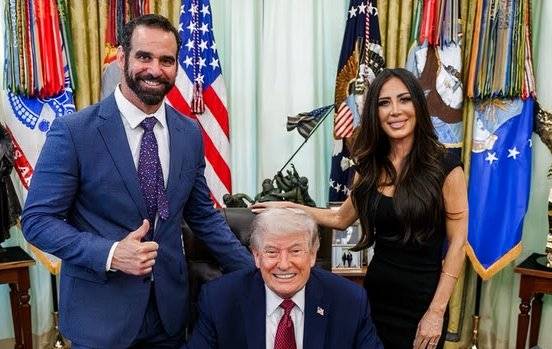
Capone and his wife, Amber, were at the White House on April 18, applauding the president’s decision to open more pathways for psychedelics in mental health treatment.
Marcus and Amber are co-founders of Veterans Exploring Treatment Solutions (VETS), a non-profit organization helping veterans interested in alternative solutions to mental health struggles.
Marcus Capone said that while he’s optimistic about the future of ibogaine based on recent studies, more testing needs to be done to legitimize the drug as a healthy mental health aid.
“What stands out to me is that the science is continuing to move in the same direction that veterans have been reporting for years. That’s encouraging, and it helps validate what my own and so many other families have seen firsthand,” Capone told Military.com. “At the same time, I think it’s important to stay disciplined here. This is promising research, not a victory lap. The takeaway is that we need more rigorous clinical trials, careful screening, and strong medical oversight so we can understand exactly who this can help and how to do it safely.”
States Lead the Way
Ibogaine use is currently legal in several countries, including Mexico, where it’s unregulated, and Canada and Brazil by prescription only. It is currently illegal in the U.S. and the UK.
There are still mysteries surrounding the drug, including some of its side effects. The drug can cause cardiovascular changes, including slowed heart rate and blood pressure shifts, and patients with heart conditions are advised to only use the drug under strict medical supervision.
However, in the U.S., states such as Texas are advancing legislation to fund more ibogaine studies. Now emboldened with action on the federal level, Capone believes additional states will follow suit.
“It was an absolute honor to stand behind President Trump when he signed the order and to share with him a little about my own experience,” he said. “The order calls for faster federal action on psychedelic research, a pathway under Right to Try for eligible patients, collaboration with (Veterans Affairs) and (Health and Human Services), and at least $50 million through ARPA-H (Advanced Research Projects Agency for Health) to support states developing these programs.”
Capone said states have been at the forefront of ibogaine research in recent years.
“Texas set the pace with its ibogaine initiative, and California has also moved to speed psychedelic research,” he said. “I think more states will follow, especially now that there’s both stronger scientific evidence and a clearer signal from Washington that this work deserves serious attention. Our position is simple: veterans should not have to leave the country they served just to access promising care.”
Help, but Not a ‘Magic Cure’
Capone said other veterans who have undergone ibogaine treatment say they finally feel “present” again.
“Not fixed overnight, not magically cured, but clearer, calmer, and more connected to their families and themselves,” Capone said. “For a lot of these veterans, the biggest change is that the noise quiets down enough for them to re-engage with life. We’ve heard veterans describe feeling like they got a second chance, as they can finally do the work of healing instead of just surviving. That kind of feedback is exactly why we’ve pushed so hard for research, to pair those lived experiences with hard data and build a safe, evidence-based path forward.”
There are plenty of misconceptions swirling around ibogaine, with the foremost being that it is definitely not a party drug. It’s a powerful psychoactive compound that seems to interact with trauma, addiction, mood and cognitive behavior in ways far different from traditional treatments.
“(Also), the conversation has to include both promise and risk. The potential is real—especially for people dealing with PTSD, TBI, addiction, and suicidality when standard treatments haven’t worked—but so is the need for medical screening and monitoring, particularly around cardiac safety,” Capone said. “And what should be promoted is not hype. It’s responsible education: the science, the clinical setting, the importance of preparation and integration, and the fact that this needs to be studied and delivered the right way.”
For veterans considering ibogaine treatments, Capone emphasized a few key points they must consider before diving in. He said it’s fine to be cautious and skeptical.
“Ibogaine is intense, and anyone telling you otherwise is not being honest. This is not about escaping reality or chasing an experience – it’s about confronting what’s underneath in a serious, medically supervised setting,” Capone said. “The second thing is that safety depends on the environment. Screening, cardiac monitoring, and medication review are all vitally important. The question is not whether ibogaine is powerful; it clearly is. The question is whether it’s being approached responsibly.”
The former Navy SEAL said it’s important that veterans ask a lot of questions and become educated about ibogaine.
“Talk to people who’ve actually been through it, and understand both the risks and the potential upside,” Capone said. “Fear usually gets worse in the absence of good information. What clears up misconceptions is transparency, not salesmanship.”