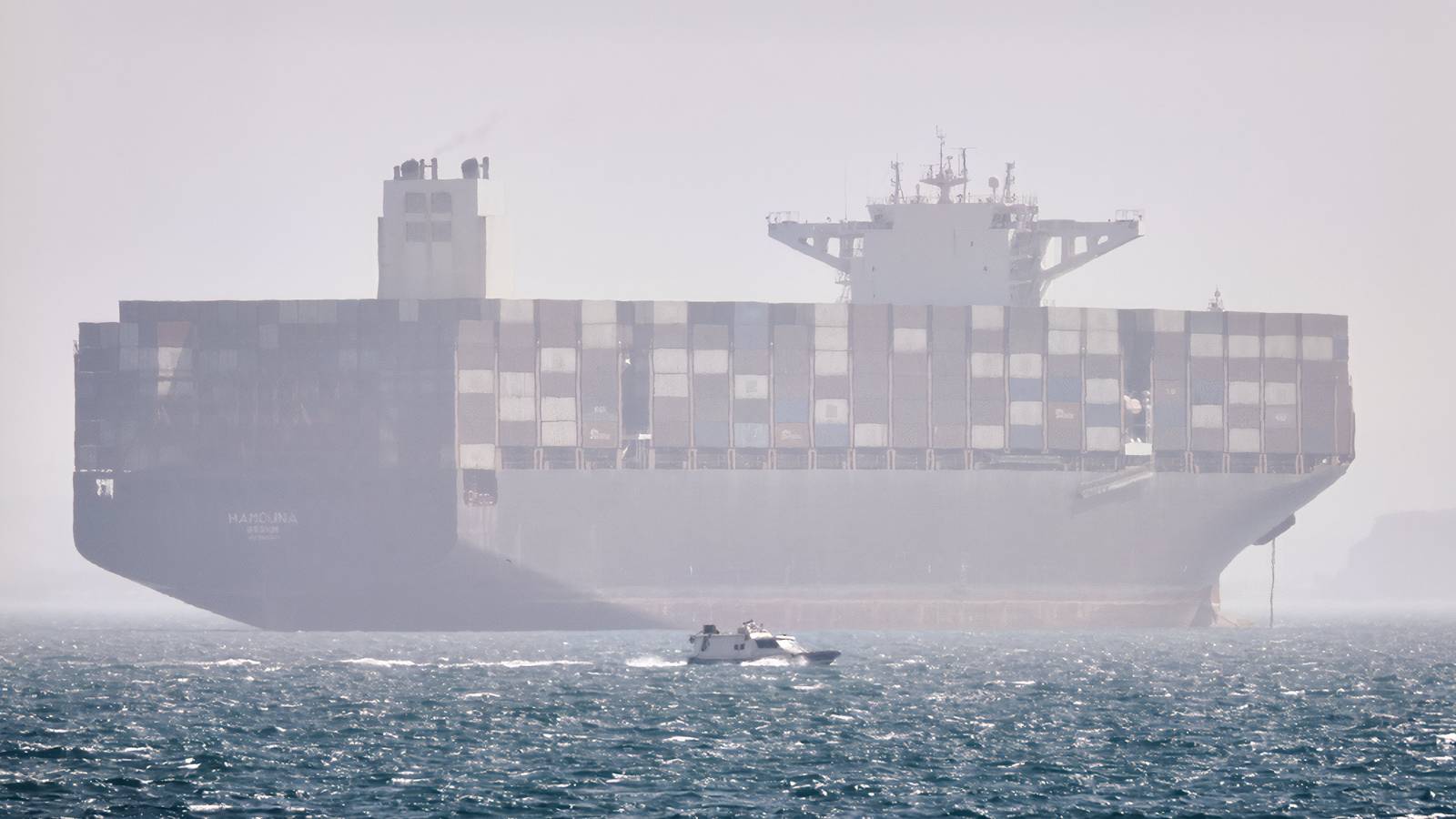
Iran claimed Thursday that it struck U.S. military assets in the Strait of Hormuz after an alleged American attack on an Iranian tanker. U.S. Central Command refuted the claims, saying that American warships intercepted Iranian missiles, drones and small boats during a transit operation and that no U.S. assets were hit.
The claims were circulated Thursday by IRIB News, part of Iran’s state broadcasting network, which cited an unnamed military official alleging U.S. military units “came under Iranian missile fire in the Strait of Hormuz and, after sustaining damage, were forced to flee” following what Tehran described as an American strike on an Iranian tanker. Military.com could not independently confirm such reports at press time.
Hours later, U.S. Central Command said Iranian forces launched “multiple missiles, drones and small boats” targeting USS Truxtun, USS Rafael Peralta and USS Mason as the guided-missile destroyers transited the Strait of Hormuz into the Gulf of Oman on May 7.
“No U.S. assets were struck,” CENTCOM said in a statement posted Thursday evening.
CENTCOM said U.S. forces “intercepted unprovoked Iranian attacks and responded with self-defense strikes” targeting Iranian missile and drone launch sites, command-and-control locations and intelligence, surveillance and reconnaissance nodes tied to the attack.
The reported confrontation comes at a volatile moment in the Gulf as Washington awaits Iran’s response to a reported U.S. peace proposal aimed at easing weeks of military escalation, maritime threats and shipping disruptions near one of the world’s most critical oil chokepoints.
Any confirmed clash involving U.S. and Iranian forces in the Strait of Hormuz could immediately raise fears of wider regional conflict and renewed threats to global energy markets and commercial shipping.
Military.com reached out for comment to U.S. Central Command, the Pentagon, the White House, the State Department, U.S. Naval Forces Central Command and the Navy.
US Officials Confront Explosive Hormuz Claims
The reported Iranian claims surfaced amid already elevated tensions in the region, where U.S. naval forces have expanded maritime security and escort operations through the Trump administration’s “Project Freedom” mission to move ships through the strait.
U.S. Central Command has also announced recent blockade enforcement actions involving vessels accused of attempting to violate restrictions tied to Iranian ports.
Commercial vessels have faced growing delays and security concerns as insurers, shipping operators and military planners monitor the risk of a broader confrontation between Washington and Tehran. Lloyd’s List reported Thursday that Iran had launched a new authority to regulate ship transits and collect tolls in the strait, while CBS News reported the firm said no transits had been recorded since May 4.
Any confirmed military exchange involving U.S. and Iranian forces in or near the Strait could immediately escalate fears of wider regional conflict while increasing pressure on global shipping lanes already strained by instability across the Middle East.
Shipping Jitters Spread Across Hormuz
The latest Iranian claim follows earlier friction over U.S. efforts to reopen the Strait of Hormuz, including previous Iranian claims of attacks on U.S. vessels that the U.S. military denied.
The U.S. has enforced a naval blockade on Iranian ports since April 13. Dozens of commercial ships had been told to turn back rather than continue toward Iranian ports.
Recent weeks have seen growing concerns over vessels delayed, rerouted or stranded near the narrow waterway as insurers, shipping operators and military planners monitored the risk of direct confrontation between Washington and Tehran.

The United Nations International Maritime Organization’s secretary-general said Thursday that about 1,500 ships and roughly 20,000 crew members were trapped in the Persian Gulf due to the conflict, according to CBS News.
Even unverified claims of military action in the area can rattle shipping markets, raise insurance costs and trigger wider concerns about regional stability and global energy supplies.
Trump Awaits High-Stakes Iran Response
The Pentagon and Navy had not publicly announced any confirmed military engagement in the Strait of Hormuz connected to the Iranian claims as of Thursday afternoon, and no evidence of damaged U.S. military assets had been publicly released.
CENTCOM later confirmed U.S. warships came under attack during the transit operation but said American forces intercepted inbound threats and carried out self-defense strikes against Iranian military facilities tied to the assault.

“CENTCOM does not seek escalation but remains positioned and ready to protect American forces,” the command said.
The White House also had not publicly commented on whether President Donald Trump had been briefed on the reported incident, or whether the administration was considering additional military, diplomatic or maritime security measures in response to the circulated claims.
Iran’s foreign ministry spokesman Esmaeil Baqaei told local media the latest U.S. proposal was “still under review,” per CBS News.
Trump said Wednesday that the U.S. had “very good talks” over the previous 24 hours and that it was possible Washington and Tehran could reach a deal.