
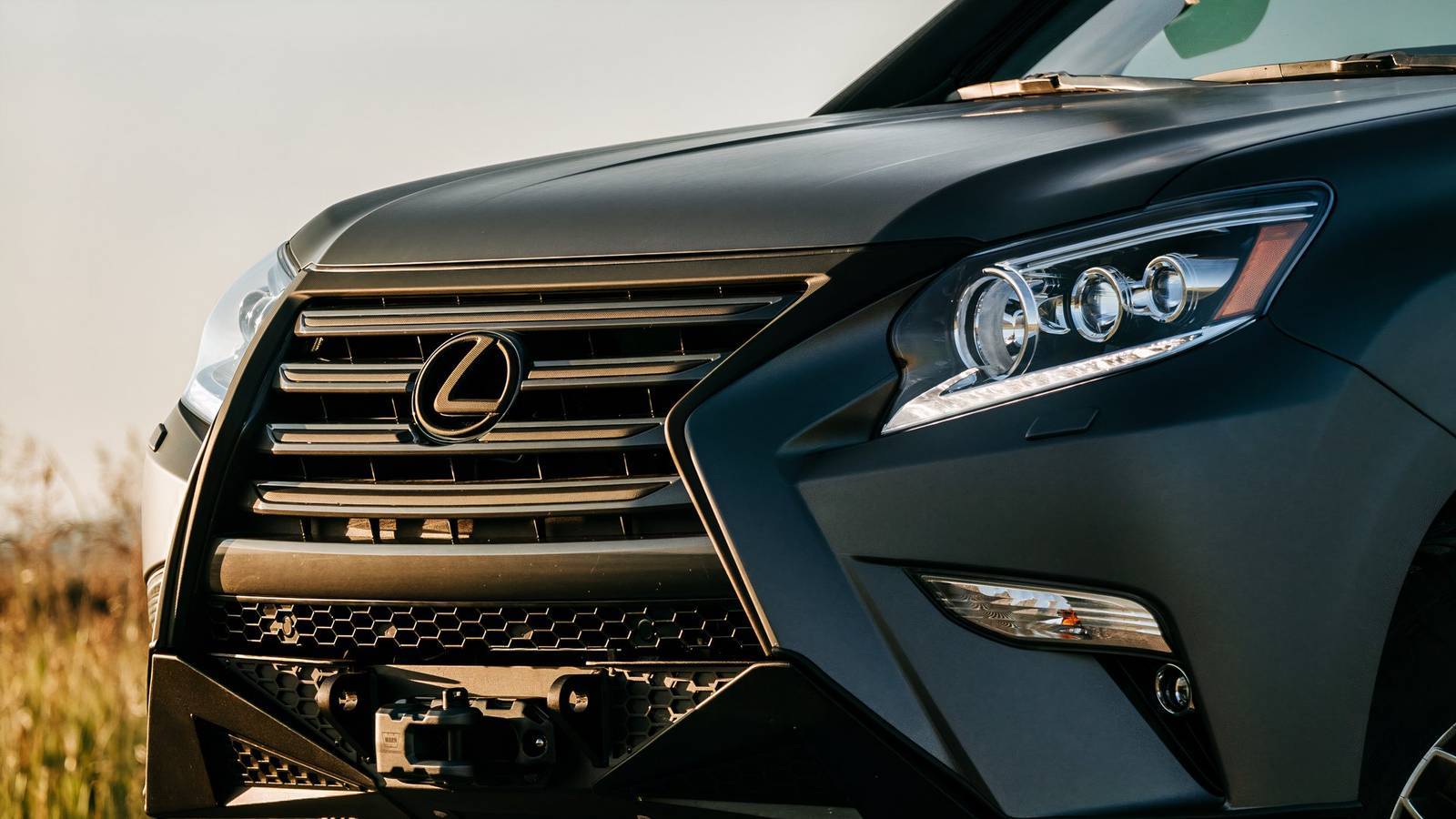
Modern vehicles grow more complex and more computerized with every passing model year, and that complexity is starting to show up in the form of increasing dependability issues, even at Toyota, long the industry benchmark for durability. Recent recall actions tied to the automaker’s new twin-turbocharged 3.4-liter V6, which serves as a V8 replacement across high-volume body-on-frame models, including the latest Lexus GX, have only sharpened the concern.
2010-2023 Lexus GX: All The Specs
The second-generation Lexus GX debuted in the US for the 2010 model year as the GX 460 and remained on sale with only incremental updates until it was finally replaced with the current GX after 2023. Over that unusually long lifecycle, Lexus kept the formula largely intact, while rolling out a facelift for 2014 that introduced the spindle grille, and another for 2017 that added an optional sport design pack alongside some new tech. Underneath, however, the core character never changed, preserving its body-on-frame durability, V8 power, and old-school SUV mission.
Key Facts To Know
- Debuted at the 2009 Guangzhou Auto Show
- Twinned with a Toyota Land Cruiser Prado sold overseas
- Features a UR V8, a family of engines with true million-mile capability
- 2023 model year stands as the final V8-powered GX
That toughness contrasted with many of its rivals in the midsize luxury SUV segment, which rode on car-like unibody platforms, and meant the GX offered genuine off-road capability. In fact, Toyota sold essentially the same vehicle as the Land Cruiser Prado in markets outside North America. Inside, the GX favored traditional luxury over technological excess, with physical controls, a quiet cabin, and a relaxed driving character. That analog simplicity, combined with proven mechanicals, remains a big part of its enduring appeal.
|
2010-2023 Lexus GX 460 |
|
|---|---|
|
Engine |
4.6-liter V8 |
|
Transmission |
6-speed automatic |
|
Power |
301 hp |
|
Torque |
329 lb-ft |
|
0-60 mph |
8 seconds (estimate) |
|
Top Speed |
110 mph (governed) |
|
Towing Capacity |
6,500 lbs |
|
Curb Weight |
5,300 lbs |
|
MSRP |
$51,970—$58,875 |
The GX came with most of the features buyers will ever need, including standard seven-passenger seating with a power-folding third row, heated and ventilated front seats, a heated steering wheel, active front head restraints, Bluetooth connectivity, and a nine-speaker audio system. Buyers who can’t live without smartphone integration should focus on 2022–2023 models, when Lexus finally added Apple CarPlay and Android Auto through a new 10.3-inch infotainment system. Likewise, a true surround-view camera system didn’t arrive until 2020, although a backup camera was available from the start and some earlier models offered side-view cameras.
Equally At Home On The Road And Off It

The side-view cameras and later surround-view system prove just as useful when off-roading as they do navigating tight parking spots, helping drivers place the GX precisely on narrow trails and technical obstacles. That’s where the Lexus really distinguishes itself from most of its luxury SUV rivals. Every GX came standard with full-time four-wheel drive, a two-speed transfer case, and Toyota’s Kinetic Dynamic Suspension System (KDSS), which improves wheel articulation off-road while maintaining impressive on-road composure. The result is a luxury SUV with genuine Land Cruiser-grade capability.
Optional features took the GX’s off-road chops even further. Higher trims offered rear air suspension with Active Height Control (AHC), which let drivers raise the rear end for improved ground clearance and approach/departure angles or drop it for easier loading and highway stability. Those same trims usually included Adaptive Variable Suspension (AVS) with adjustable dampers that could be switched between comfort, sport, and firmer off-road modes.
Starting with the 2020 model year, Lexus also introduced an Off-Road Package that came with the clever Multi-Terrain Monitor, which used cameras to deliver a so-called transparent hood, letting you precisely place tires around rocks, ruts, and other obstacles that would otherwise be hidden.
Powertrain: A Bulletproof V8 Engine

Powering the second-generation GX was an all-aluminum 4.6-liter V8 that remained unchanged throughout the SUV’s run. Known to enthusiasts by its 1UR-FE engine code and shared with the Toyota Tundra and Toyota Sequoia of the era, the V8’s peak numbers aren’t the stuff of headlines, but its durability certainly is. Owners regularly report odometer readings well beyond 300,000 miles, and the engine has earned a reputation as one of Toyota’s most dependable modern powerplants. With proper maintenance, it’s the sort of engine that can probably outlast your need for the vehicle.
The secret to the 1UR-FE’s longevity lies in its simplicity. Unlike many modern luxury SUV engines, it skips features that add stress and complexity like turbochargers. It also uses a timing chain instead of a timing belt, which requires more frequent changing, and the relatively low state of tune also helps its longevity. It helps explain why the second-gen GX earns strong reliability marks overall, with J.D. Power consistently awarding it high Quality & Reliability scores in the mid-to-upper 80s (out of a total 100 points), while RepairPal gives it a 3.5 out of 5.0 rating, ranking it 5th out of 14 luxury midsize SUVs.
Still, buyers should still inspect service records carefully. Water pumps can wear with age, while neglected cooling systems and overdue fluid changes can shorten the life of even the toughest engines. Fuel economy may also be an issue if you rack up a lot of miles, with the second GX featuring EPA estimates of 15 mpg city, 20 highway, and 17 combined.

Behind the wheel, the 1UR-FE suits the GX’s character perfectly. Its peak 301 horsepower and 329 pound-feet of torque arrive smoothly and predictably, providing effortless acceleration rather than neck-snapping speed. The six-speed automatic shifts unobtrusively, while the V8 delivers a refined soundtrack that never rudely intrudes into the cabin. It’s not as rev-happy as the more famous 2UR-GSE 5.0-liter V8 that Lexus used in its high-performance applications, but for comfortable, confident highway cruising, the 1UR-FE is perfect.
The second-generation GX stands out as the last midsize Lexus SUV to offer a V8. Today, Lexus reserves V8 power for the Lexus LC, and even that model is at the end of its run. Toyota, meanwhile, has already phased out all V8s in its US lineup, although a new twin-turbocharged 4.0-liter V8 has been developed for the GR GT supercar arriving later this year.
Read the full article on CarBuzz
This article originally appeared on CarBuzz and is republished here with permission.