Jim Whittaker, the Army veteran and mountaineer who became the first American to reach the summit of Mount Everest, died Tuesday at his home in Port Townsend, Washington. He was 97.
Whittaker died peacefully with his wife, Dianne Roberts, and other family members at his side, according to a statement from the family released by his son Leif.
His 1963 ascent of the world’s tallest peak made him an overnight celebrity, earned him a meeting with President John F. Kennedy and launched a decades-long career that helped transform the American outdoor recreation industry. But before any of that, Whittaker was a U.S. soldier, drafted into the Army during the Korean War and assigned to train some of the military’s best troops in the mountains of Colorado.
From Boy Scouts to the Army
Whittaker and his twin brother, Lou, were born Feb. 10, 1929, and grew up in the Arbor Heights neighborhood of West Seattle. They discovered climbing as teenagers through the Boy Scouts and the Mountaineers, a Seattle-based outdoor club, according to a tribute posted by the organization.
By 16, the brothers had summited Mount Olympus, the highest peak in Washington’s Olympic Mountains at 7,965 feet. In his memoir, “A Life on the Edge,” Whittaker recalled that when they reached the town of Port Angeles on the return trip, they found cars honking and people celebrating the end of World War II.
The twins became mountain guides on Mount Rainier and took over management of the national park’s guide service in 1949, as Whittaker detailed in his memoir. Between climbing seasons, Whittaker studied at Seattle University and worked as a ski equipment salesman.
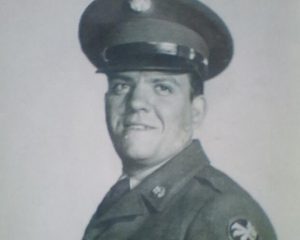
When the Korean War broke out, both brothers were drafted into the Army. Initially assigned to a Signal Corps detachment in California, their climbing credentials quickly earned them a transfer to the Army’s Mountain and Cold Weather Training Command at Camp Hale, Colorado, the original installation of the 10th Mountain Division.
The twins arrived at Camp Hale in January 1953. Their assignment was to prepare soldiers for cold-weather combat, teaching alpine climbing, skiing techniques, bivouacs and mountain maneuvers, all skills they had sharpened as civilian guides on Mount Rainier. The Whittaker Mountaineering company, founded by the family, noted on its website that the brothers also trained special forces soldiers and taught ice climbing at Wind River, Wyoming.
Both brothers received honorable discharges in 1954 and returned to Seattle. The 10th Mountain Division was later named both as honorary members when the unit was reactivated in 1985.
From REI to the Top of the World
A year after leaving the Army, Whittaker got a call from Lloyd Anderson, the co-founder of REI and a friend from his Mountaineers days. The small Seattle cooperative had about 600 members and Anderson needed help keeping up with demand, according to a post on REI’s website.
Whittaker became REI’s first full-time paid employee in 1955. He was a one-man operation, handling everything from stocking shelves to making bank deposits, he later recalled.
He stayed with REI for a quarter century, eventually rising to president and CEO. During his tenure leading the company from 1971 to 1979, the co-op’s membership grew from roughly 250,000 to more than 900,000.
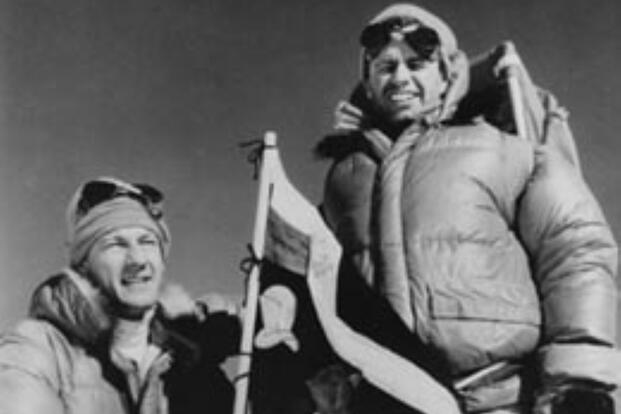
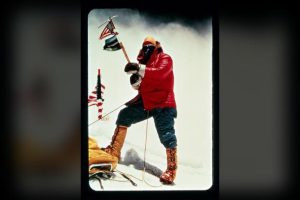
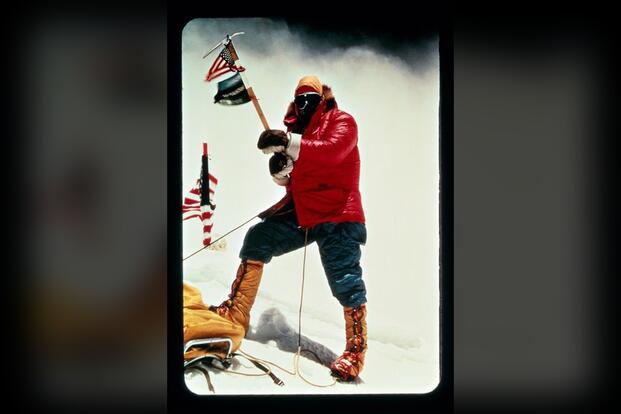
On May 1, 1963, Whittaker and Sherpa Nawang Gombu reached the summit of Everest, a decade after Edmund Hillary and Tenzing Norgay first stood on the 29,032-foot peak. The expedition earned Whittaker and his teammates the National Geographic Society’s Hubbard Medal, which President Kennedy presented at the White House. Seattle threw a parade in his honor.
The 6-foot-5 Whittaker was a physical force on the mountain. According to the Spokesman-Review, fellow climber John Roskelley of Spokane, who later joined him on a K2 expedition, said that other climbers always talked about how big and strong Whittaker was.
In 1965, Whittaker guided Sen. Robert F. Kennedy to the summit of Mount Kennedy in Canada’s Yukon Territory, a previously unclimbed peak named for President Kennedy. The two became close friends. Whittaker worked on RFK’s 1968 presidential campaign and was at the senator’s bedside when he died after being shot in Los Angeles, according to NPR.
In 1978, Whittaker organized and led the expedition that achieved the first American ascent of K2, the world’s second-tallest and one of its most dangerous mountains.
A Legacy Beyond the Summit
Whittaker’s Everest climb helped fuel a surge in American interest in mountaineering and outdoor recreation. His work at REI turned a small Seattle cooperative into a national enterprise, giving the outdoor industry a recognizable face at a time when climbing was still an obscure pursuit.
He also used that platform to advocate for conservation. The co-op later credited his congressional testimony with helping establish North Cascades National Park, the Pasayten Wilderness and Redwood National Park in California.
In 1990, at the tail end of the Cold War, Whittaker organized the Mount Everest International Peace Climb, bringing together climbers from the United States, the Soviet Union and China. Twenty climbers reached the summit over four days. The team also hauled more than two tons of garbage off the mountain that earlier expeditions had left behind.
He and his brother co-founded Rainier Mountaineering Inc., which remains one of the country’s premier mountain guide services. Whittaker summited Mount Rainier more than 100 times during his career. He was also an accomplished sailor, competing twice in the 2,400-mile Victoria-to-Maui International Yacht Race. Lou Whittaker died in 2024 at age 95.
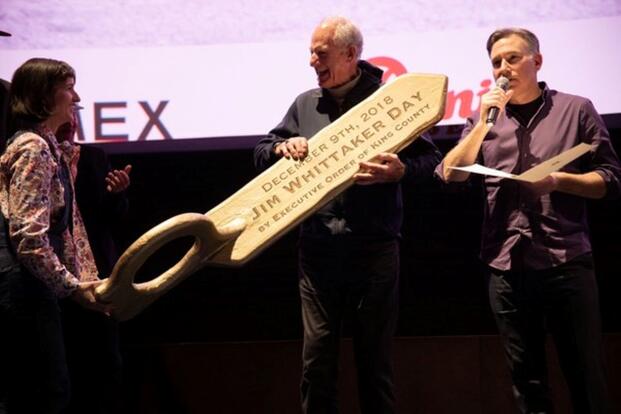
King County, Washington, declared Dec. 9 as “Jim Whittaker Day” in his honor.
Former Washington Gov. Jay Inslee wrote on social media that Whittaker’s legacy was “just as impressive, and just as lasting, as Mount Rainier itself.”
Jim Whittaker is survived by his wife of 52 years, Dianne Roberts; sons Bobby, Joss and Leif Whittaker; three grandchildren; and one great-grandchild. He was preceded in death by two sons, Carl and Scott.
Every American who has laced up their hiking boots, clipped into a climbing harness or strapped on skis owes their gratitude to Whittaker, the veteran from Seattle who turned a life in the mountains into a movement that reshaped how the country spends its time outdoors.