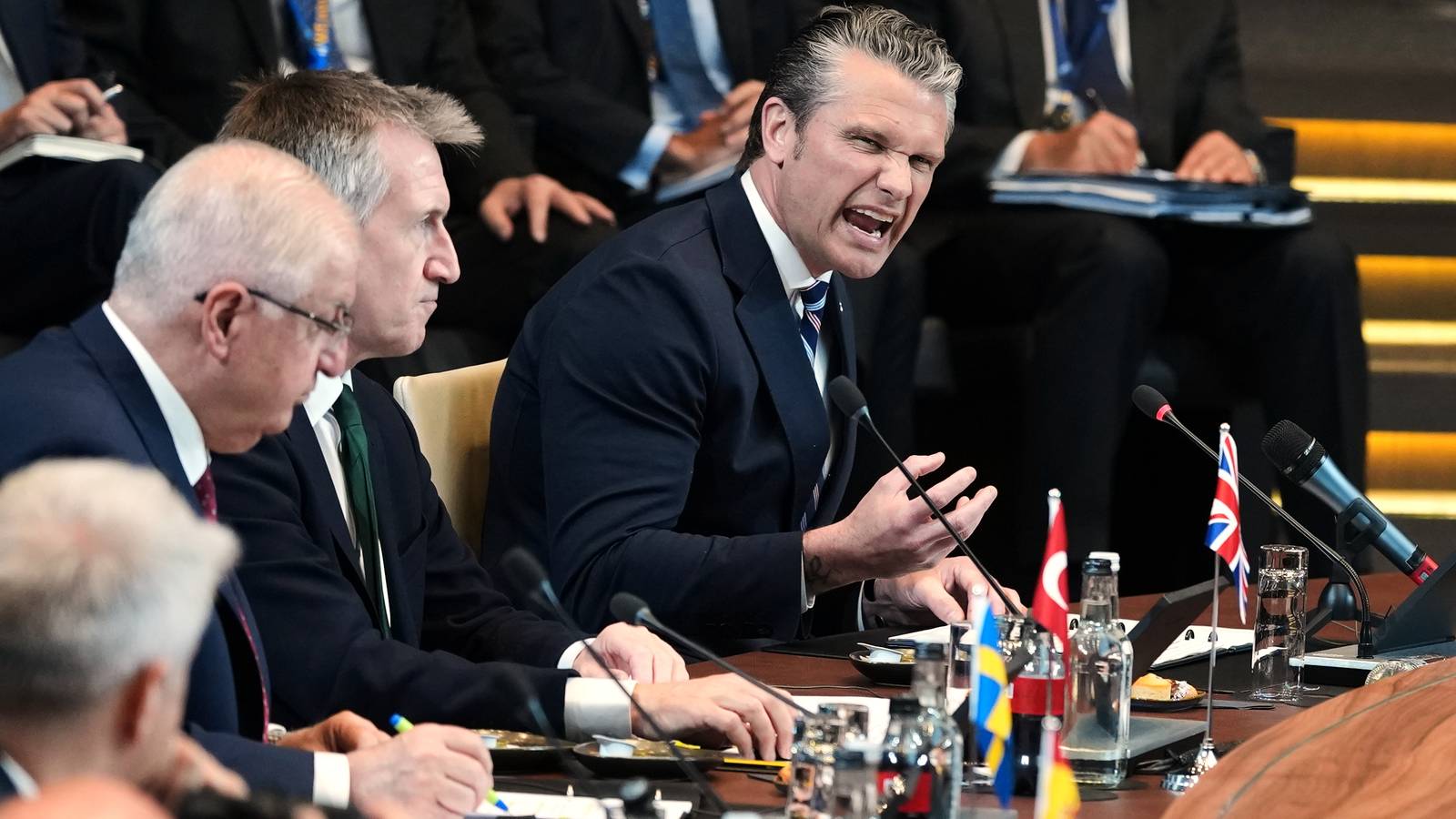
The Pentagon will begin screening active-duty service members 30 and older for testosterone deficiency every year, Defense Secretary Pete Hegseth announced Wednesday, framing the move as a readiness measure while leaving any resulting treatment up to the individual.
The screening will be added to the periodic health assessment that troops already complete each year, Hegseth said in a video posted on social media. Service members younger than 30 will be able to request the test voluntarily. While the screening will be mandatory for eligible troops, any treatment that follows—including testosterone replacement therapy, or TRT—will not be.
“I’m authorizing a new screening program for testosterone deficiency for our service members, ensuring you have the right testosterone levels to operate at your absolute best,” Hegseth said in the video.
“If treatment is recommended, it’s entirely your choice to receive testosterone replacement therapy,” he added.
Hegseth cast the initiative, which he branded “High-T,” as part of the department’s effort to maintain what he has repeatedly called the military’s most decisive advantage: the individual war fighter.
“This initiative, it’s not about artificial enhancement,” Hegseth said. “It’s about restoring and optimizing your natural capabilities, protecting your longevity, ensuring you have the biological foundation required to sustain the fight.”
“The modern battlefield is brutal and unrelenting,” he continued. “It requires and demands maximum psychological and mental readiness, and by addressing these health markers early, we’re keeping you on the leading edge of lethality.”
The New Policy
The periodic health assessment is a yearly evaluation that has been mandatory across the force since 2016, gauging a service member’s medical and behavioral health along with their readiness to deploy.
Hegseth said the assessment itself is not changing. The department is adding testosterone screening to an exam troops already sit through.
For members 30 and older, that screening will be a standard part of the annual assessment. For those under 30, it will be available on request. A member whose results indicate a deficiency may be offered treatment, but the decision to pursue it, including TRT, rests with the individual.
Hegseth did not say when the program will begin. The Defense Department declined to comment further on the announcement, according to NOTUS, leaving open questions about how the screening will be implemented across the services and how results will be handled.
What Science Says
Men see their levels decline by roughly 1% a year after age 30 or 40, according to the Mayo Clinic—a change generally considered a normal part of aging.
A deficiency can contribute to fatigue, reduced muscle strength, lower libido or depression. Medical organizations recommend treatment only when low testosterone is confirmed by testing and paired with symptoms.
The U.S. Food and Drug Administration does not approve testosterone replacement therapy for men who do not have a diagnosed form of hypogonadism, a condition tied to a malfunction of the organs that produce testosterone.

Interest in the issue is not new to the Pentagon. A provision in the Fiscal Year 2025 National Defense Authorization Act (NDAA) asked the defense secretary to brief Congress on the military’s available treatments for low testosterone and its existing testing and screening protocols, according to Task & Purpose.
Special operations veterans have also raised low testosterone as a health concern, linking it to a cluster of physical and mental health issues sometimes called “Operator Syndrome.”
The “High-T” label Hegseth chose echoes a theme popular among online fitness influencers, who have promoted higher testosterone as a marker of male strength and vitality. NOTUS described it as “a social media fad” pushed by influencers, and the framing has drawn skeptical coverage from some outlets questioning whether the branding reflects a cultural current as much as a clinical one.
The Big Picture
The screening program is the latest in a series of moves by Hegseth, an Army National Guard veteran and former Fox News co-host, to reshape the force around physical standards and what he describes as a warrior ethos.
In a September speech to hundreds of senior officers at Marine Corps Base Quantico, Va., Hegseth declared there would be “no more beardos” and no more “fat troops,” unveiling a slate of directives on fitness and appearance.

Secretary of War Pete Hegseth hosts a prayer service at the Pentagon, Washington, D.C., May 20, 2026.
Pentagon officials followed with memos requiring active-duty troops to take two annual fitness tests and work out each duty day, in addition to tightened grooming rules requiring most service members to be clean-shaven.
This spotlight on grooming standards even narrowed the medical shaving waivers, which for decades allowed for pseudofolliculitis barbae—a painful skin condition that disproportionately affects Black men. Officials said it’s a matter of readiness and a safety risk, rather than based on appearance.
In December, the department issued new guidance on measuring body composition. It has moved toward gender-neutral physical standards for combat roles, with Hegseth saying that if the higher bar means fewer women qualify for some jobs, “It is what it is.”
Military.com has reported on the review of fitness, body composition, and grooming standards, which Hegseth ordered in his first months at the Pentagon and has continued to press since.
The testosterone initiative extends that emphasis from what troops wear and weigh to their underlying physiology.
What We Still Don’t Know
Several questions remain unanswered.
The department has not said when screening will start, how much the added testing will cost, or how it will be phased in across the Army, Navy, Air Force, Marine Corps and Space Force.
It has not detailed how a deficiency result will be recorded, who will have access to it, or whether it could have any effect on a member’s assignments or career.
Also unaddressed is how the military will square a program that screens troops for low testosterone with the FDA’s stance that testosterone replacement therapy is approved only for men with a diagnosed medical condition affecting hormone production.